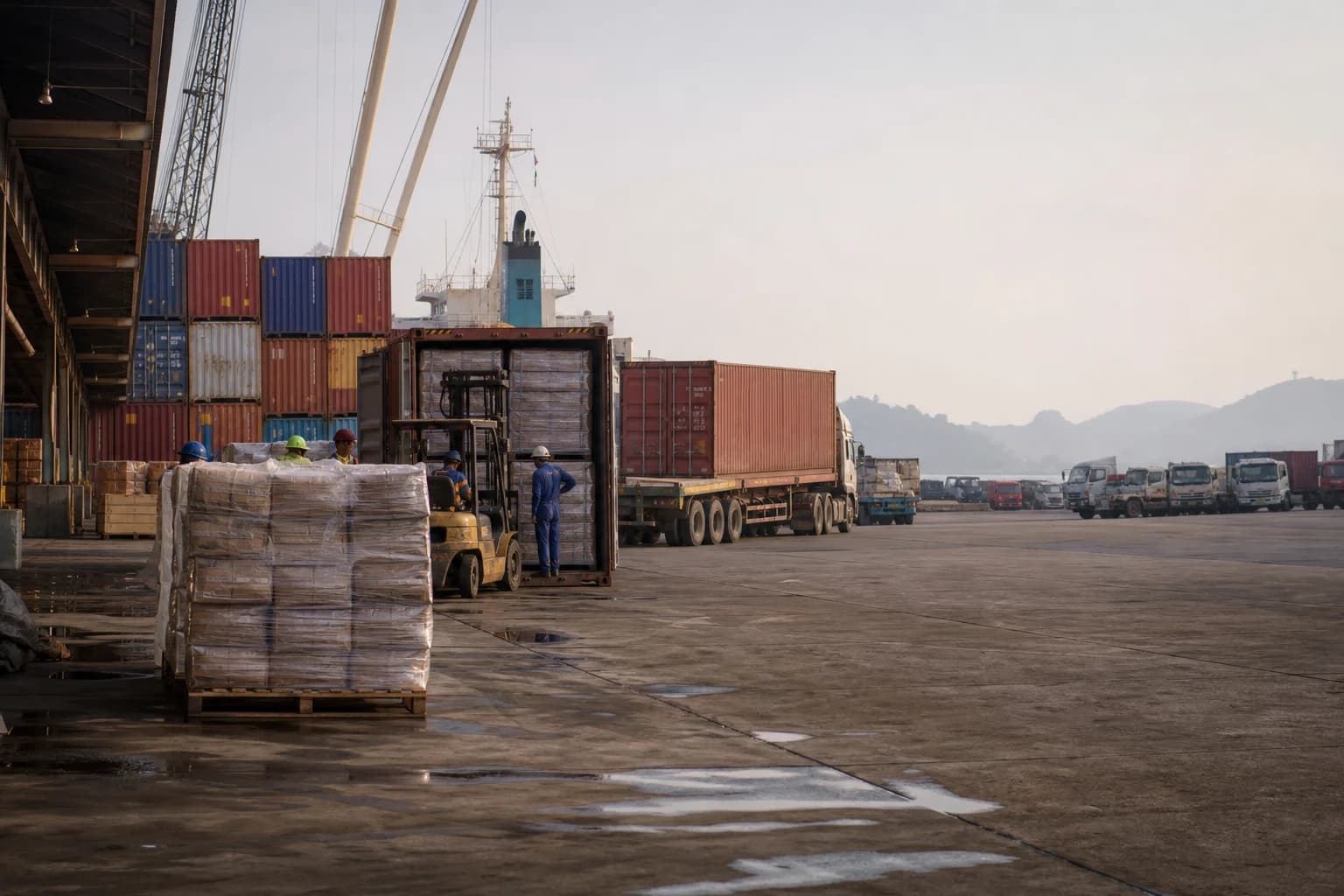
Importing from Dubai to Africa in 2027: when the UAE beats China
For some purchases, the United Arab Emirates can outperform Chinese factory pricing: small batches, multi-brand buying, fast replenishment, and visual checks before shipment. Here is how to weigh total landed cost, lead time, and risk.
Rédaction Shipsen Market
8 min read
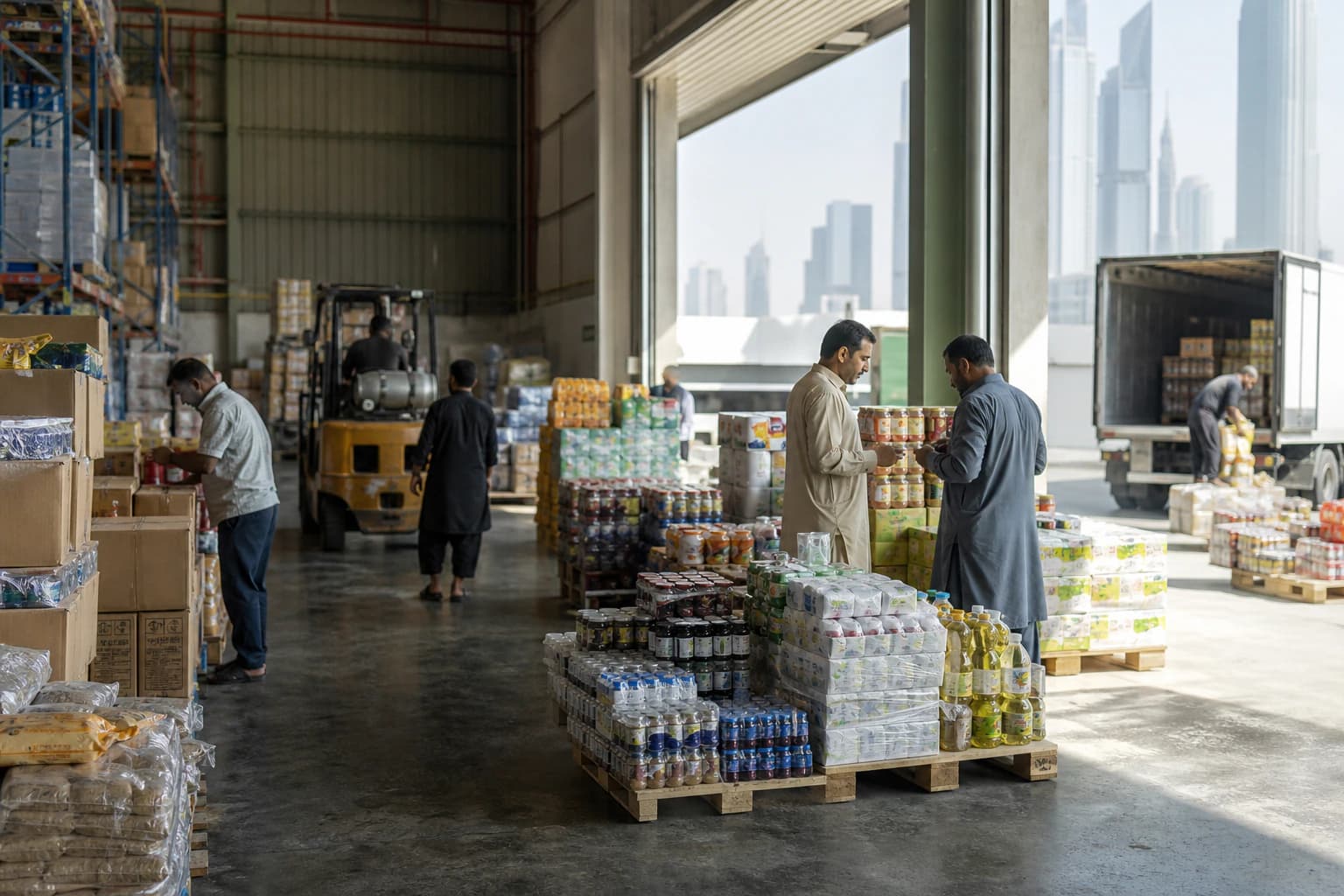
For importing from Dubai to Africa in 2027, the real question is no longer just the unit price, but the balance between lead time, margin, and risk. When you need to restock quickly, buy several brands in small quantities, or inspect goods before shipment, the UAE can become a more efficient sourcing base than China. But you still need to know when this model truly creates value, and when it simply adds a costly middleman.
When Dubai is more competitive than China
China generally remains stronger on factory pricing, industrial depth, and volume. But for an African importer, the best source is not always the one that manufactures most cheaply. The United Arab Emirates, and Dubai in particular, wins when the buyer needs commercial flexibility rather than maximum production-cost optimization.
Dubai often beats China in four practical situations:
- Small batches: when a Chinese factory imposes MOQs that are too high, a UAE-based wholesaler can sell by cartons, mixed pallets, or mini-lots.
- Multi-brand purchases: instead of opening several supplier accounts in China, the buyer can consolidate with one trader or across several showrooms in the same trading zone.
- Fast replenishment: for fast-moving references, saving one to three weeks can protect margin more reliably than a lower purchase price.
- Visual quality control before shipment: physical presence is easier, inspection is simpler, and corrections can be made before loading.
This model is particularly suitable for importers selling to retailers, neighborhood resellers, specialist shops, or projects that cannot wait for a full factory + production + shipping cycle from East Asia.
In other words, Dubai becomes strong when you are buying available or quickly accessible stock, not when you are developing a custom product.
Which products are truly suitable for importing from Dubai to Africa
Not all products are equal. The UAE is rarely the best base for highly regulated technical goods or customized manufacturing. On the other hand, it is effective for standardized items, repacked goods, multi-source products, or goods distributed through regional trading networks.
Products that are often a good fit
- Small appliances and standard household equipment.
- Telecom accessories, small consumer electronics, peripherals, and consumables.
- Fast-moving auto parts, lubricants, batteries, and workshop accessories.
- Finishing materials, lighting, hardware, sanitary ware, and DIY items.
- Ready-to-sell apparel, footwear, luggage, and mid-range fashion accessories.
- General merchandise, simple toys, décor, gifts, and retail supplies.
Products that are less suitable
- High-value industrial machinery requiring installation, after-sales service, and precise technical documentation.
- Regulated products with strict local approval requirements: medical goods, some cosmetics, sensitive food products, and electrical equipment subject to specific standards.
- Private-label manufacturing or production based on detailed specifications.
The right question to ask is: is this a trading stock item or a real manufacturing project that must be managed? If it is fast trading stock, Dubai has an advantage. If it is industrial production, China usually remains in control.
Total cost: purchase price, freight, MOQ, consolidation, and lead times
Comparing Dubai with China only on catalog price is a mistake. You need to think in terms of total landed warehouse cost and speed to resale.
| Criterion | Dubai / UAE | China |
|---|---|---|
| Unit price | Often higher | Often lower at equivalent volume |
| MOQ | More flexible, mixed cartons possible | Often higher, especially at factory level |
| Multiple SKUs | Easy via wholesalers and traders | More fragmented across several suppliers |
| Availability lead time | Fast if locally stocked | Longer if production is needed |
| Pre-shipment inspection | Easier for the African buyer | More structured but farther away |
| Customization | Limited | Very strong |
In practice, four variables completely change the equation:
- The real MOQ: buying 300 units available in Dubai may end up costing less than a 2,000-unit MOQ in China tied up for months.
- Consolidation: if you are buying ten references from three sellers in the same city, groupage can be smoother than fragmented sourcing across China. To compare groupage with a full container, see also https://shipsenmarket.com/fr/insights/fret-maritime-2026-vers-l-afrique-fcl-ou-lcl-afrique.
- Inventory turnover speed: a product sold 15 days earlier can help finance the next order. This cash-flow gain sometimes offsets a higher purchase price.
- The cost of mistakes: if you receive a non-compliant batch after a long transit, the initial apparent savings disappear quickly.
For replenishment product lines, use a simple calculation: gross margin per cycle x number of annual cycles. A slightly more expensive but faster source can generate more profit over a year.
Be careful, though: Dubai does not eliminate port charges, customs, inland transport, and documentation fees. Many importers underestimate these cost lines. A useful reminder: https://shipsenmarket.com/fr/insights/erreurs-douane-import-10-pieges-qui-bloquent-vos-imports.
How to verify the supplier, real stock, and compliance before payment
The main risk in the UAE is not always outright fraud. It is often commercial misunderstanding: stock that is announced but incomplete, a different brand from the one promised, inconsistent quality grade, missing accessories, altered packaging, or insufficient documents for import into your country.
What to verify before sending the deposit
- Legal identity: active trade license, physical address, invoicing entity name, and bank details under the same name.
- The seller’s actual role: stockist, authorized distributor, trader, commission agent, or simple intermediary.
- Real availability: ask for a dated video of the stock, with product reference, approximate quantity, and visible packaging.
- Brand and origin: a product shipped from Dubai is not necessarily made in the UAE.
- Document compliance: commercial invoice, packing list, certificate of origin if required, technical data sheets, manuals, and any necessary certificates of conformity.
- After-sales and breakage rules: who bears the cost of missing parts, breakage rates, returns, or credit notes.
For first orders, the safest approach is a trade-focused pre-shipment inspection, not just a quality inspection. The inspector should count cartons, compare references with the purchase order, check appearance, packaging condition, quantities per carton, markings, and take usable photos.
If you are buying an assortment, require a SKU breakdown table before final payment. Many disputes come from this point: the total value is correct, but the delivered product mix does not match the market need.
Practical rule: never pay the balance based only on a pro forma invoice. Pay against proof of stock, a validated final list, and consistent documents.
Order checklist to avoid bad surprises on arrival
A successful order from Dubai depends less on price negotiation than on the precision of the file. Here is the minimum checklist to lock down.
- Define the purchasing objective: market test, replenishment, seasonal demand, range extension, or urgent gap-filling.
- Set a landed warehouse ceiling: not just an FOB or EXW budget.
- Validate the product mix: references, quantities, variants, units per carton, and exact photos.
- Confirm the Incoterm: EXW, FOB, CFR, CIF, or other, with port of departure and destination clearly stated.
- Request dimensions and weight: gross, net, total cubic volume, and number of packages.
- Check import eligibility in your country: standards, labeling, approvals, manual language, and restrictions.
- Arrange the inspection before paying the balance.
- Secure the payment: limited deposit, balance against agreed evidence, and written records of all terms.
- Prepare customs clearance before shipment, not after arrival.
The decisive point is often this: do you want to buy cheaper, or do you want to sell faster? If your market mainly suffers from stockouts, small mixed orders, and urgent needs, the UAE can beat China without being cheaper per unit.
What to do now: a simple method to decide
Before your next order, test a three-scenario approach on the same references:
- China factory scenario: best price, higher MOQ, longer lead time.
- China trader scenario: a compromise between cost and flexibility.
- Dubai available-stock scenario: higher price, shorter lead time, potentially lower operational risk.
For each one, compare five indicators: landed cost, door-to-door lead time, capital tied up, expected gross margin, and resale timing. If Dubai lets you get the product back on the shelf faster with less capital blocked, the advantage is real. Otherwise, China remains the better buying point.
Finally, start with a disciplined test order: a short assortment, mandatory inspection, clearly defined transport terms, and a post-sale turnover analysis. This is how a wholesaler or young importer turns Dubai from a merely opportunistic hub into a truly useful sourcing base for Africa.
Frequently asked questions
Is Dubai cheaper than China for African importers?
Usually not on factory price. Dubai’s advantage appears mainly in the total cost of small orders, multi-brand buying, faster replenishment, and lower error risk thanks to easier pre-shipment inspection.
Which products are really worth buying through the UAE?
Mainly standardized, fast-moving products: small appliances, accessories, common auto parts, hardware, ready-to-sell apparel, and general merchandise. It is less suitable for complex machinery or heavily regulated products.
How can you verify that a supplier in Dubai has real stock?
Ask for the trade license, physical address, a dated stock video, the SKU list with quantities, packaging photos, and confirmation of the invoicing entity. For a first order, arrange an independent pre-shipment inspection.
What is the main risk when buying from Dubai?
It is often the gap between what is promised and what is actually available: substituted references, incomplete quantities, missing accessories, insufficient documents, or misunderstood origin. That is why the commercial agreement and inspection are essential.
- #Commerce international
- #Émirats arabes unis
- #Sourcing
- #Import Afrique
- #Fret maritime
- #Grossistes
Shipsen Insights content is provided for information. Shipsen Market is a platform that connects buyers and suppliers: always check terms, prices and regulations with your partners and the authorities before any commitment.